
Knee pain can slowly change every part of daily life. Simple activities such as walking to the shops, climbing stairs, driving, or even getting out of bed may become difficult over time. For many people living with severe arthritis or long-term joint damage, knee replacement surgery offers a chance to move more comfortably and enjoy life again.
However, many patients are unsure whether they need a total knee replacement or a partial knee replacement. Both procedures are designed to reduce pain and improve movement, but they are not exactly the same. Understanding the differences can help you make the right decision alongside your specialist.
Lancashire Hip Knee Clinic, Orthopaedic Surgeon Prof. Kuntal Patel provides expert assessment and advanced treatment options for patients across Blackburn, Blackpool, Lancaster, and other areas of the United Kingdom. This guide explains the key differences between total knee replacement surgery and partial knee replacement surgery in simple terms.
Understanding Knee Replacement Surgery
The knee is one of the largest and hardest-working joints in the body. Over time, arthritis, injuries, or wear and tear can damage the cartilage inside the joint. When the cartilage becomes worn away, the bones begin rubbing against each other, causing pain, swelling, stiffness, and reduced movement.
A knee replacement operation involves removing the damaged part of the knee joint and replacing it with artificial components designed to restore smoother movement.
Modern advances in knee replacement have made these procedures safer, more accurate, and more effective than ever before. Many patients can now return to normal daily activities with less pain and improved mobility.
There are two main types of surgical knee replacement: total knee replacement and partial knee replacement.
The right choice depends on the condition of your knee joint.

What Is a Total Knee Replacement?
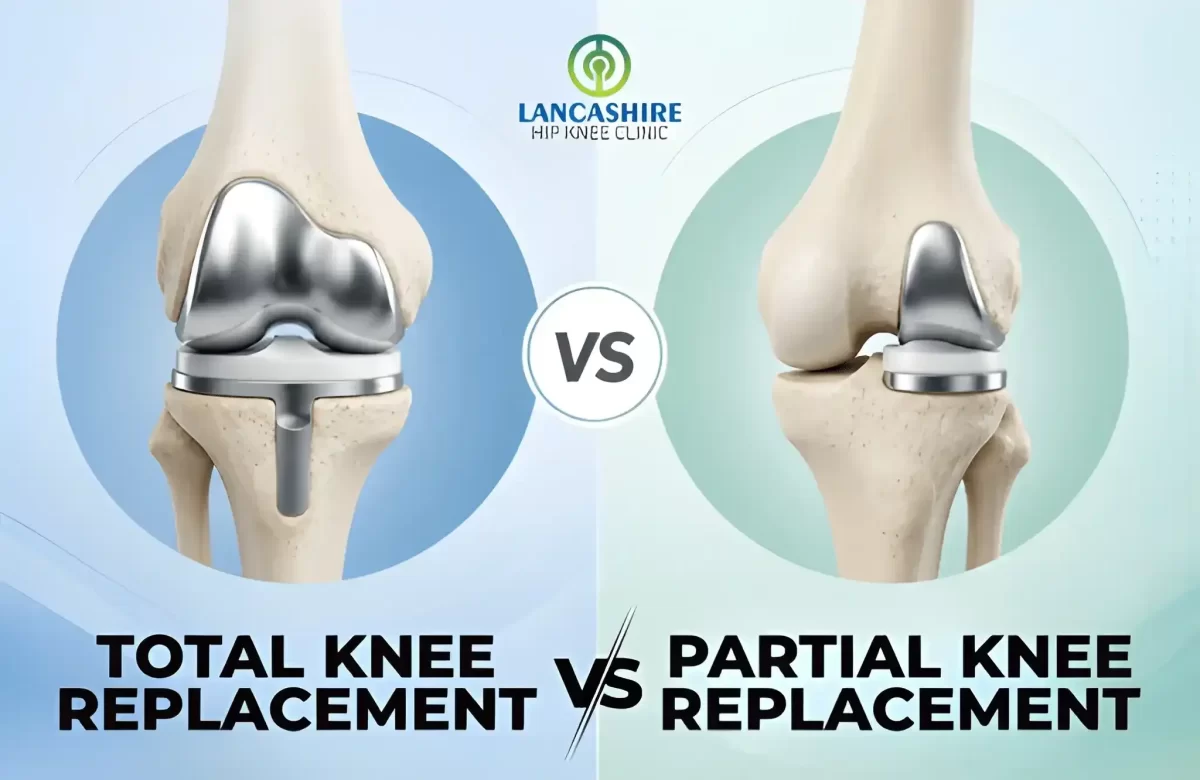
A total knee replacement is a procedure where the entire knee joint surface is replaced with artificial components. This treatment is often recommended when arthritis or joint damage affects more than one section of the knee.
During total knee replacement surgery, the damaged cartilage and small portions of bone are removed from the thigh bone, shin bone, and sometimes the kneecap. These areas are then replaced with specially designed implants.
Total knee replacement is commonly recommended for patients with severe osteoarthritis, widespread knee damage, chronic pain, stiffness, and reduced movement that affects everyday life. It is also considered when non-surgical treatments no longer provide relief.
Many people who undergo knee replacement surgery experience major improvements in pain levels and quality of life.
What Is a Partial Knee Replacement?
A partial knee replacement only replaces the damaged part of the knee while preserving the healthy areas of the joint.
This procedure is sometimes known as a half knee replacement or partial uni knee replacement.
The knee has three compartments. If arthritis affects only one section, a partial knee replacement procedure may be suitable.
Unlike total knee replacement surgery, this operation keeps more of the natural knee structures intact, including healthy bone, cartilage, and ligaments.
Partial knee replacement surgery is usually recommended for patients whose damage is limited to one part of the knee and who still have healthy ligaments, good movement, and overall knee stability.
A detailed consultation with partial knee replacement surgeons is important to decide whether this option is appropriate.

Key Differences Between Total and Partial Knee Replacement
Although both procedures aim to reduce pain and improve movement, there are several important differences.
Area of the Knee Replaced
A total knee replacement replaces the full joint surface.
A partial knee replacement operation replaces only the damaged section.
Recovery Time
Patients undergoing a partial knee replacement procedure often recover more quickly because less tissue is disturbed during surgery.
Many patients can walk sooner and regain movement faster compared to total knee replacement patients.
Surgical Size and Scarring
A partial knee replacement scar is generally smaller because the surgery is less invasive.
Total knee replacement surgery usually requires a larger incision due to the greater amount of joint work involved.
Knee Movement and Feel
Because more natural structures are preserved, some patients feel that a partial knee replacement feels more natural during movement.
However, total knee replacement remains highly successful for people with widespread arthritis.
Long-Term Suitability
A total knee replacement may last longer in patients with extensive joint damage.
Partial knee replacement surgery works best when arthritis is limited to one compartment only.
Who Is Suitable for Partial Knee Replacement?
Not every patient qualifies for a partial knee replacement. A specialist assessment is needed to determine whether the arthritis is isolated to one area.
You may be considered suitable if arthritis affects only one compartment of the knee, your ligaments remain healthy, and the knee still has good stability and movement.
Patients searching for partial knee replacement NHS treatment options should still undergo careful evaluation because NHS partial knee replacement suitability depends on specific clinical findings.
Lancashire Hip Knee Clinic, every patient receives a personalised treatment plan based on symptoms, scans, lifestyle, and long-term goals.
Benefits of Partial Knee Replacement
Many patients choose partial knee replacement because of its less invasive approach.
Potential benefits include a smaller incision, shorter hospital stay, faster recovery, less pain after surgery, and more natural knee movement. Patients may also experience reduced blood loss and a smaller partial knee replacement scar.
Patients often return to normal activities sooner compared to full knee replacement procedures.
However, partial knee replacement is only effective when the remaining parts of the knee are healthy.

Benefits of Total Knee Replacement
A total knee replacement remains one of the most successful orthopaedic procedures worldwide.
Benefits may include excellent pain relief, improved walking ability, better quality of life, and long-lasting results for patients with severe arthritis.
For patients with widespread knee damage, total knee replacement surgery is often the best long-term solution.
Recovery After Knee Replacement Surgery
Recovery varies from person to person.
Following knee replacement surgery, most patients begin walking with support shortly after the operation. Physiotherapy plays a major role in rebuilding strength and movement.
After a partial knee replacement operation, recovery is usually quicker. Some patients return to office-based work within several weeks.
Recovery after total knee replacement may take longer, but many patients gradually return to normal daily activities over several months.
During recovery, patients are usually advised to attend physiotherapy sessions, perform strengthening exercises, control swelling carefully, and avoid high-impact activities in the early stages of healing.
Revision Knee Replacement Explained
Although modern implants are designed to last many years, some patients may eventually require revision knee replacement surgery.
Revision on knee replacement involves replacing or repairing a previous implant.
This may become necessary because of implant wear over time, infection, loosening of components, injury, or ongoing pain.
Revision procedures are usually more complex than primary knee replacement surgery and should be performed by experienced specialists.
Knee Replacement Charges in the United Kingdom
Many patients also ask about knee replacement charges.
The cost of knee replacement surgery in the United Kingdom can vary depending on the type of procedure, hospital location, implant selection, surgeon expertise, and rehabilitation requirements.
Private treatment may offer shorter waiting times and faster access to specialist care.
Patients considering partial knee replacement NHS pathways may receive treatment through the NHS depending on clinical eligibility and local waiting lists.
Advances in Knee Replacement Technology
Recent advances in knee replacement have improved patient outcomes significantly.
Modern techniques now focus on more accurate implant positioning, smaller surgical incisions, improved implant materials, faster rehabilitation programmes, and better long-term durability.
Technology-assisted surgery and personalised surgical planning are helping surgeons achieve improved precision and better recovery experiences.
These developments continue to improve the success rates of both total knee replacement and partial knee replacement surgery.
Choosing the Right Knee Replacement Option
The best treatment depends on factors such as the severity of arthritis, your age, activity level, overall knee condition, lifestyle goals, and general health.
Some patients are ideal candidates for partial uni knee replacement, while others benefit more from total knee replacement surgery.
A thorough assessment with an experienced orthopaedic specialist is the most important step.
Expert Knee Replacement Care with Lancashire Hip Knee Clinic
Lancashire Hip Knee Clinic, Orthopaedic Surgeon Prof. Kuntal Patel provides specialist assessment and treatment for patients suffering from knee arthritis and long-term joint pain.
Patients from Blackburn, Blackpool, Lancaster, and across the United Kingdom trust the clinic for personalised care and advanced orthopaedic treatment.
Whether you are considering a partial knee replacement procedure or a total knee replacement, receiving expert advice can help you make a confident and informed decision.
Final Thoughts
Both total knee replacement and partial knee replacement can provide excellent pain relief and improved mobility when performed for the right reasons.
A partial knee replacement may offer quicker recovery and more natural movement for suitable patients, while total knee replacement remains the gold standard for widespread arthritis and severe joint damage.
The most important step is receiving an accurate diagnosis and personalised treatment plan from an experienced specialist.
If knee pain is affecting your quality of life, it may be time to book an appointment with Orthopaedic Surgeon Prof. Kuntal Patel at Lancashire Hip Knee Clinic to discuss the most suitable treatment options for your needs.
FAQs
1. What is the difference between total knee replacement and partial knee replacement?
A total knee replacement replaces the entire knee joint, while a partial knee replacement only replaces the damaged part of the knee. The right option depends on how much of the joint is affected by arthritis or damage.
2. Is partial knee replacement better than total knee replacement?
Partial knee replacement may offer faster recovery and more natural movement for suitable patients. However, total knee replacement is often better for people with severe or widespread arthritis.
3. How long does knee replacement surgery recovery take?
Most patients recover gradually over several weeks to months. Recovery after partial knee replacement surgery is usually quicker than total knee replacement surgery.
4. Who is suitable for partial uni knee replacement?
Patients with arthritis limited to one compartment of the knee and healthy ligaments may be suitable candidates for partial uni knee replacement.
5. Does a partial knee replacement scar look smaller?
Yes, a partial knee replacement scar is usually smaller because the surgery is less invasive than a full knee replacement operation.
6. Can a partial knee replacement later become a total knee replacement?
Yes, some patients may eventually require revision knee replacement or conversion to total knee replacement if arthritis develops in other parts of the joint.
7. What are the benefits of total knee replacement surgery?
Total knee replacement can reduce severe pain, improve walking ability, increase joint stability, and improve overall quality of life.
8. How painful is knee replacement surgery?
Some discomfort is expected after surgery, but modern pain management and physiotherapy help patients recover more comfortably.
9. What are knee replacement charges in the United Kingdom?
Knee replacement charges vary depending on the hospital, surgeon, implant type, and whether treatment is private or through the NHS.
10. When should I book an appointment for knee pain?
You should book an appointment if knee pain affects walking, sleep, daily activities, or continues despite medication and physiotherapy.