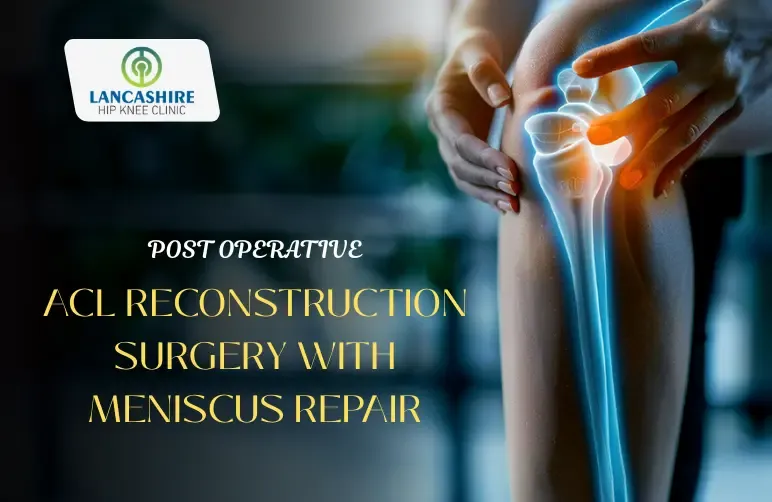

Post Operative – ACL Reconstruction Surgery with Meniscus Repair
Recovering from knee surgery is rarely just a physical process – it’s something that affects your daily routine, your confidence, and even your mindset. If you’ve recently undergone ACL reconstruction surgery with meniscus repair, you’re likely wondering what the next few weeks and months will look like. It’s completely normal to feel a mix of relief, uncertainty, and even a bit of impatience as you begin your recovery journey.
Lancashire Hip & Knee Clinic, patients across Blackburn, Blackpool, Lancaster, and surrounding areas in the United Kingdom are supported well beyond the operating theatre. Whether you’ve had acl knee surgery, a cruciate ligament operation, or a more complex reconstructive procedure, the focus is always on steady, safe recovery. Understanding what to expect can make a significant difference in how confident and comfortable you feel during this phase.
Understanding the Surgery You’ve Had
Anterior Cruciate Ligament injuries are among the most common knee injuries, particularly for those who lead an active lifestyle or participate in sports. The ACL plays a vital role in stabilising the knee, and when it is torn, it can lead to a feeling that the knee may give way during movement. In many cases, especially when combined with a meniscus injury, surgical treatment becomes the most effective solution.
ACL reconstruction is not simply a repair; it involves rebuilding the damaged ligament using a graft, allowing the knee to regain its strength and stability over time. When performed alongside meniscus repair, the goal is not only to restore movement but also to protect the long-term health of the joint. This combined approach, often referred to as ACL Reconstruction Surgery & Injury Treatment, is typically carried out using minimally invasive techniques, which help reduce recovery time and improve outcomes.

The First Few Days After Surgery
The initial days following acl surgery are often the most challenging, both physically and emotionally. Your knee will feel swollen, stiff, and somewhat restricted, which is entirely expected after a procedure of this nature. Arthroscopic knee surgery swelling is particularly common, as the body responds to the surgical process and begins healing.
During this stage, rest becomes your most important tool. You will likely be advised to keep your leg elevated and to use cold therapy to manage swelling. Walking may be possible, but usually with the support of crutches and a knee brace to ensure stability. It’s important not to rush this phase, as the foundation of your recovery is built in these early days. Giving your body the time it needs now can prevent complications later on.
Managing Pain and Supporting Healing
Pain after acl knee surgery is generally manageable, but it can vary depending on the individual and the extent of the procedure. Rather than disappearing overnight, discomfort tends to gradually ease as healing progresses. Following your prescribed pain management plan, along with simple measures like icing and gentle movement, can make a noticeable difference.
At the same time, it’s worth remembering that swelling and stiffness are part of the healing process, not signs that something has gone wrong. With the right care and guidance, these symptoms will slowly improve. At Lancashire Hip & Knee Clinic, patients are given clear, practical advice to help them feel in control during recovery, which can be incredibly reassuring at a time when everything feels new.
Regaining Movement and Confidence
One of the most important milestones after acl recon is regaining movement in the knee. This doesn’t happen all at once – it’s a gradual process that requires patience and consistency. In the beginning, even simple movements may feel difficult, but with time, your range of motion will improve.
Walking will become easier as your strength returns, and the need for support such as crutches will reduce. Whether your surgery was for a complete tear or a partial tear of acl, the focus remains the same: restoring natural movement while protecting the healing structures within the knee. It’s not just about physical recovery, but also about rebuilding confidence in your body’s ability to move safely.
The Importance of Physiotherapy
Physiotherapy is not just an optional part of recovery – it is absolutely essential. After acl orthopedic surgery, the muscles around the knee often weaken, and without proper rehabilitation, it can be difficult to regain full function.
Your physiotherapy programme will be carefully structured, starting with gentle exercises and gradually progressing to more demanding movements. While it may feel slow at times, each stage is designed to support healing and prevent future injury. Skipping steps or pushing too hard too soon can do more harm than good, so it’s important to trust the process.
Returning to Everyday Life
As your recovery progresses, you will begin to return to your normal routine, although this happens in stages rather than all at once. Everyday activities such as walking, driving, or returning to work become easier with time, but they should always be approached with care.
For those who have undergone reconstructive knee surgery or cruciate surgery, patience is especially important. The knee needs time to regain its strength and stability before it can handle more demanding tasks. Listening to your body and following professional advice will help ensure a smoother transition back to daily life.
Getting Back to Sport and Activity
For many patients, the ultimate goal after acl reconstruction is returning to sport or an active lifestyle. This is entirely achievable, but it requires time, dedication, and careful progression. The knee must be strong, stable, and fully healed before it can cope with high-impact movements.
Rushing back too soon can increase the risk of re-injury, which may lead to further procedures such as acl replacement or additional surgery. Taking a measured approach not only protects your knee but also gives you the best chance of long-term success.
Costs and Practical Considerations
It’s quite natural to think about the financial side of treatment as well. The acl operation cost or acl knee surgery cost can vary depending on factors such as the complexity of the procedure, the hospital setting, and the level of aftercare required.
Similarly, reconstructive knee surgery cost may be higher when additional procedures, such as meniscus repair, are involved. At Lancashire Hip & Knee Clinic, patients are provided with clear and transparent information so they can make informed decisions without unnecessary stress.
Special Cases and Alternatives
Not every ACL injury requires surgery, and in some cases, acl repair without surgery may be considered. This is more common in less severe injuries or where the knee remains stable. However, for many patients – particularly those who are active or experiencing ongoing instability – surgery offers the most reliable outcome.
In younger patients, such as those needing pediatric acl surgery, treatment is carefully adapted to support growth and long-term joint health. Consulting an experienced acl specialist near me ensures that the treatment plan is tailored to your specific needs.
Choosing the Right Specialist
The quality of your recovery is closely linked to the expertise of your surgeon. Many patients begin their search online using phrases like acl specialist near me, but it’s important to look beyond convenience and focus on experience.
At Lancashire Hip & Knee Clinic, patients are treated by Orthopaedic Surgeon Prof. Kuntal Patel, who specialises in acl in knee surgery and advanced reconstructive procedures. With clinics serving Blackburn, Blackpool, and Lancaster, patients have access to expert care within the United Kingdom, ensuring they receive the support they need at every stage.
Final Thoughts
Recovering from ACL reconstruction surgery with meniscus repair is a journey that requires patience, commitment, and the right support. While the process may feel slow at times, each step plays an important role in restoring strength, stability, and confidence in your knee.
With proper care, guided rehabilitation, and expert medical support, most patients are able to return to their normal activities and enjoy a good quality of life once again. If you are preparing for surgery or currently in recovery, don’t hesitate to seek advice and reassurance.
Book an appointment with Lancashire Hip & Knee Clinic to receive personalised care and expert guidance throughout your recovery journey.
FAQs
1. How long does recovery take after ACL reconstruction?
Recovery usually takes several months, depending on your rehabilitation progress and overall health.
2. Is swelling normal after surgery?
Yes, arthroscopic knee surgery swelling is very common in the early stages.
3. When can I walk normally again?
Walking improves gradually, and most patients regain normal walking within a few weeks.
4. Can I avoid ACL surgery?
In some cases, acl repair without surgery is possible, but it depends on the injury.
5. When can I return to sports?
Returning to sports usually takes several months and should only be done when the knee is fully stable.
6. How long will I need to use crutches after ACL surgery?
Most patients use crutches for one to two weeks, but this can vary depending on how well your knee is healing. Your surgeon or physiotherapist will guide you on when it is safe to walk without support.
7. Is it normal to feel stiffness after ACL reconstruction?
Yes, stiffness is quite common in the early stages of recovery. It usually improves with regular physiotherapy and gentle movement as your knee becomes stronger and more flexible.
8. Can the ACL tear again after surgery?
While ACL reconstruction is highly successful, there is still a small risk of re-injury, especially if you return to sports too soon. Following your rehabilitation plan carefully can significantly reduce this risk.
9. When can I start driving again after ACL surgery?
You can usually return to driving once you are comfortable, no longer relying on crutches, and able to control your leg safely. This often takes a few weeks, but it’s best to confirm with your doctor.
10. What should I avoid during recovery?
It’s important to avoid high-impact activities, sudden twisting movements, and putting too much weight on the knee too early. Taking things slowly helps protect the new ligament and ensures better long-term results.